
FOB vs CFR vs CIF: Key Differences in International Commodity Trading
Understand the key differences between FOB, CFR and CIF, including ocean freight responsibilities, cargo insurance and risk transfer in international commodity trading.
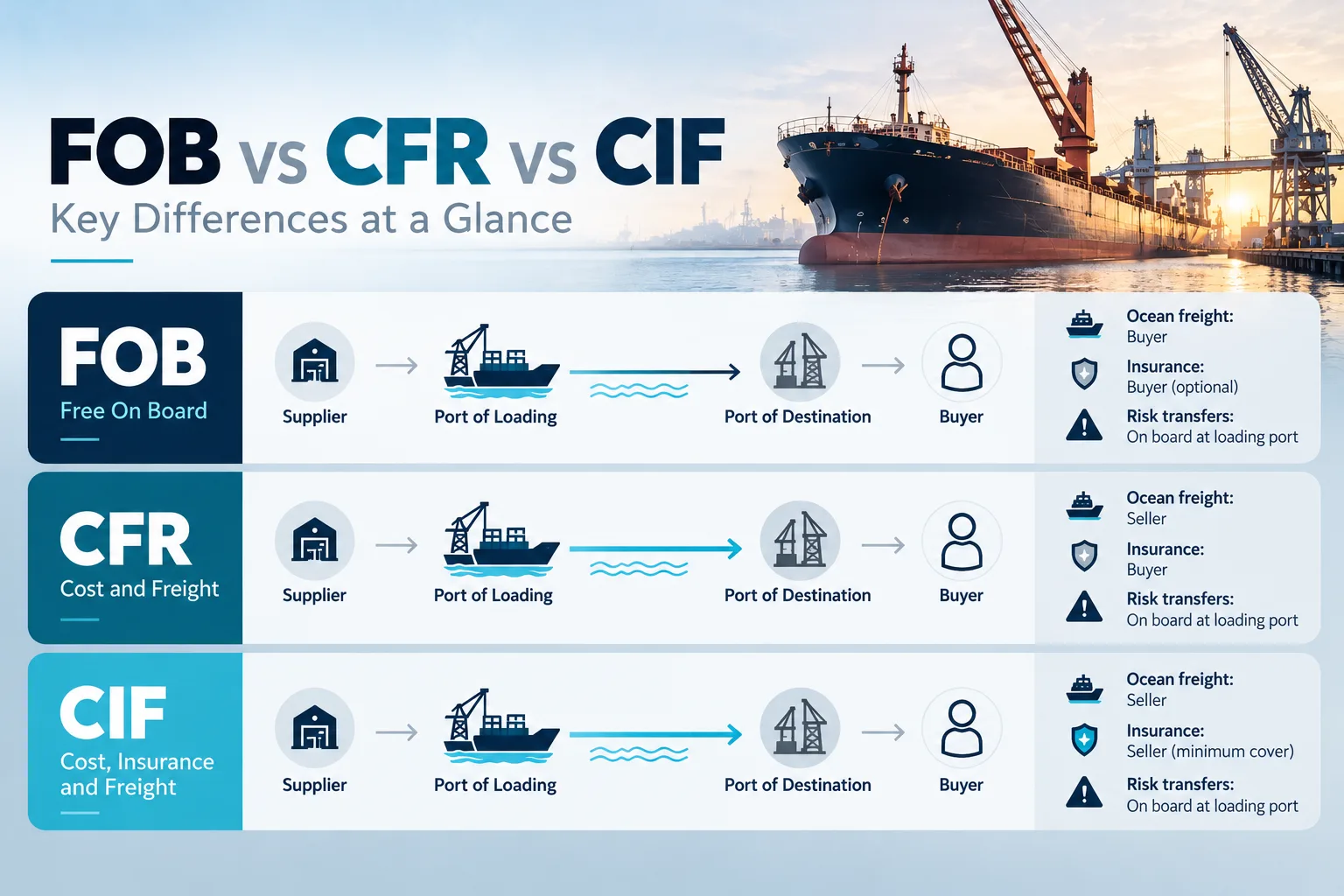
Understanding FOB, CFR and CIF
FOB — Free On Board
Under FOB, the seller delivers the goods on board the vessel nominated by the buyer at the agreed loading port. The buyer arranges and pays for the main ocean freight and decides whether to obtain cargo insurance.
FOB is often suitable for experienced buyers who prefer to manage their own shipping arrangements.
CFR — Cost and Freight
Under CFR, the seller arranges and pays for ocean freight to the named destination port.
However, risk transfers to the buyer once the goods are on board the vessel at the loading port, not upon arrival at the destination.
The seller is not required to provide cargo insurance.
CIF — Cost, Insurance and Freight
CIF includes the seller's obligation to arrange and pay for ocean freight and obtain cargo insurance.
As with CFR, risk transfers to the buyer when the goods are on board at the loading port.
Under Incoterms® 2020, CIF generally requires minimum insurance coverage under Institute Cargo Clauses (C), unless broader coverage is agreed.
What Should Commodity Buyers Consider?
1. Freight Costs and Control
FOB offers buyers greater control over shipping arrangements, while CFR and CIF place responsibility for contracting the main ocean transport on the seller. The most suitable option depends on freight availability, shipping experience and commercial priorities.
2. Insurance and Risk Exposure
A common misconception is that CIF means the seller carries the transportation risk until the cargo arrives. In fact, the risk-transfer point is the same under all three rules.
Buyers should carefully review insurance coverage, exclusions and any need for additional protection.
3. Port Charges and Contractual Clarity
Destination handling charges, unloading costs, demurrage and other expenses can materially affect the final transaction cost.
Contracts should clearly identify the loading and destination ports, the applicable Incoterms® version and any agreed allocation of additional charges.
For containerized shipments delivered to a carrier before vessel loading, FCA, CPT or CIP may be more appropriate than traditional maritime terms.
Conclusion
FOB, CFR and CIF establish different transportation and insurance obligations, but share the same fundamental point of risk transfer: delivery on board at the shipment port.
For international commodity buyers, evaluating freight responsibilities, insurance protection and contractual conditions is just as important as comparing quoted prices.
CAVA TRADE connects international buyers and suppliers, supporting informed commercial decisions across global commodity markets and maritime trade.